


Iran manoeuvres for a role in Karabakh
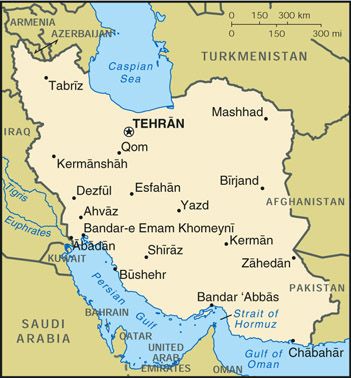
Iran’s role in the Nagorno-Karabakh conflict has always been more complicated than suggested by its image in the outside world.
14:21 / 06.04.2010 The millenarian Islamic Republic favouring an avowedly Christian state in a dispute with its predominantly Shiite Muslim neighbour seems like an unlikely situation. But since the war in the early 1990s, Iran has been pre-disposed towards supporting Armenia over Azerbaijan on the Karabakh issue. Iranian attempts to broker a ceasefire in 1992 failed and, shortly after, Armenian forces captured Shusha and Lachin, leading to doubts in Azerbaijan about Iran’s commitment.
Subsequently, Tehran has publicly expressed a neutral and balanced approach to the conflict. However, it has built a strong economic alliance with Yerevan. Iran supplies Armenia with significant volumes of its natural gas, and is its sole supplier aside from Russia. It has also helped to construct hydro-electric dams on the Araz river between the two states.
Iranian support of Armenia is largely due to strategic balancing. The huge population of ethnic Azerbaijanis in Iran’s north-western provinces have always been seen as a potential secessionist threat by Tehran. This is notwithstanding the high positions which many Azerbaijanis have reached in Iran (even the Supreme Leader Ayatollah Ali Khamenei is ethnically Azerbaijani).
Tehran seems to believe that if Azerbaijan regained Karabakh and the surrounding regions, it could potentially provoke an upsurge of nationalist feeling in the north-western provinces of Iran. The status quo is preferable. Tehran has also been angered by competition with Baku over disputed Caspian oil and gas resources, and by Azerbaijan’s growing ties with the West and with Israel.
As the facts on the ground change, Iran is forced to adapt its policy accordingly. When the negotiations on the Madrid Principles (a framework for resolving the Karabakh conflict, envisaging Armenia’s initial withdrawal from some of the occupied lands surrounding Nagorno-Karabakh itself in exchange for security guarantees) intensified, Tehran reiterated its willingness to mediate.
Iranian diplomats have repeatedly criticised the OSCE’s Minsk Group of Russia, France and the US for failing to resolve the conflict after 18 years. This is hardly a rare (or unjustified) criticism. However, Iran’s ambassador to Azerbaijan Muhammad Bagir Bahrami also suggested that these non-regional countries “are only pursuing their own agendas and view the Nagorno-Karabakh issue as a means of furthering their own interests." (RIA Novosti, February 1).
Exactly what those interests are is not made clear, but the insistence on a regional solution indicates Iran’s deep concern over peacekeeping forces in Karabakh, one of the conditions of the Madrid Principles.
Given Iran’s deeply antagonistic relationship with the West, the deployment of international military forces – probably from the OSCE - just a few miles from its northern border would provoke serious concern and add to Tehran’s fear of encirclement (US troops are already to the west in Iraq; the east in Afghanistan; the south-west in the Gulf; and the north-east in Central Asia).Bu yazı ( 316 ) - dəfə oxunmuşdur


